
What Are Epaulettes and How Did They Originate?
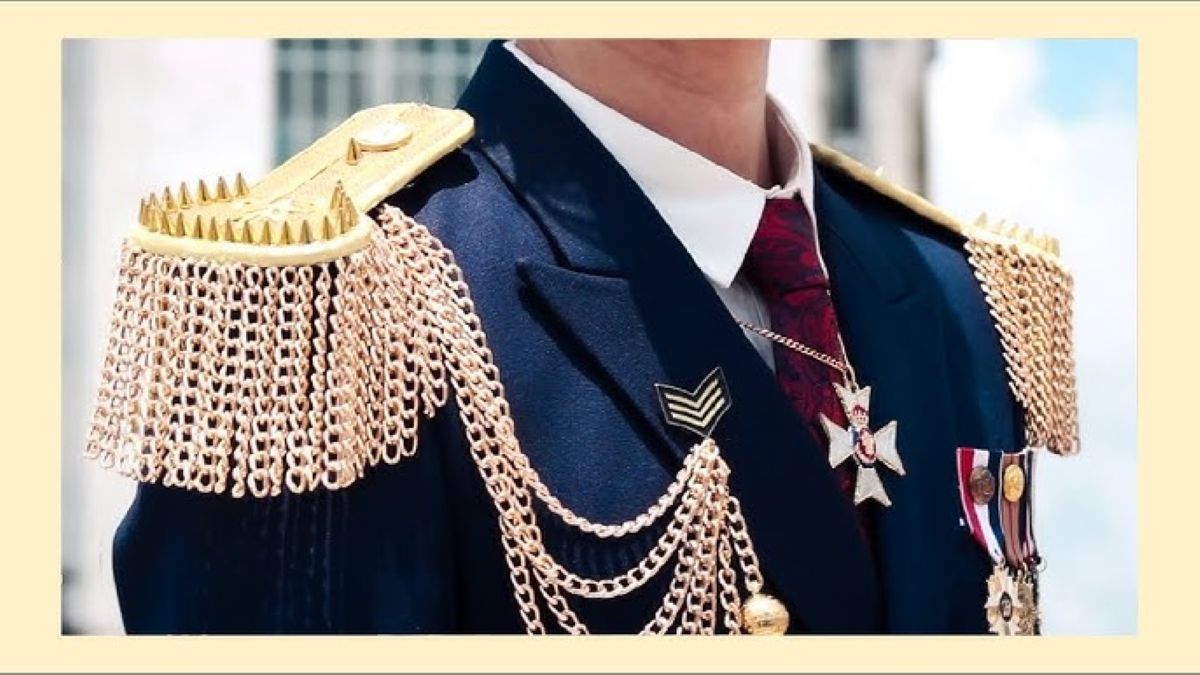
Epaulettes are decorative shoulder pieces that evolved from bunches of ribbons worn on military coats during the 17th century. These ornamental elements initially served a practical purpose—preventing shoulder belts from slipping off soldiers’ uniforms during combat and daily wear.
The transformation from simple ribbons to structured military epaulettes occurred gradually as armed forces recognised their potential for visual distinction. By the 18th century, these shoulder decorations had become standardised insignia of rank, with commissioned officers wearing increasingly elaborate versions to denote their authority and position within military hierarchies.
Key design elements that define traditional military epaulettes include:
- Fringes: Dangling threads or bullion that vary in length according to rank
- Metal components: Stars, crowns, or other symbols crafted from gold or silver
- Shoulder straps: Known as passenten, secured by buttons near the collar
- Insignia: Unit numbers, regimental badges, or rank indicators
- Colour variations: Gold for senior officers, silver for junior ranks, or cloth for lower positions
The materials used in epaulette construction communicate specific information about the wearer. Gold bullion typically signifies higher-ranking officers, whilst silver or cloth versions indicate junior commissioned ranks. Some designs incorporate intricate embroidery or metal scales that catch light during formal ceremonies, enhancing the visual impact of dress uniforms.
Epaulettes remain primarily associated with ceremonial and formal military uniforms rather than field dress. Their ornate construction makes them impractical for combat situations, yet their historical significance ensures they continue appearing on parade grounds and official functions worldwide.
What Constitutes Shoulder Decorations Beyond Epaulettes?
Shoulder decorations types extend far beyond traditional epaulettes to include aiguillettes, shoulder boards, embroidered patches, tassels, and metal scales. Each serves distinct purposes within military and organisational uniforms, offering varied levels of formality and functionality.
Aiguillettes
Aiguillettes consist of braided cords looped around the shoulder, typically featuring metal tips called aglets. These ornamental cords hang from the shoulder in specific patterns, with colours and configurations denoting different roles—gold braiding often indicates aide-de-camp positions, whilst silver or other colours may represent staff officers or ceremonial duties. The intricate braiding creates a distinctive appearance that immediately identifies the wearer’s function.
Shoulder Boards
Shoulder boards represent the most practical category of shoulder decorations. These flat, rigid pieces attach directly to uniform shoulder straps, displaying rank insignia through embroidered or metal symbols. Unlike epaulettes’ three-dimensional structure, shoulder boards lie flush against the uniform, making them ideal for everyday service dress where durability matters more than ceremonial grandeur.
Embroidered Patches
Embroidered patches offer versatility in shoulder decoration, ranging from simple unit identifiers to elaborate regimental crests. These cloth-based uniform embellishments attach via stitching or Velcro, allowing for easy replacement and customisation. Military organisations frequently use embroidered patches to display unit affiliations, special qualifications, or operational theatre service.
Tassels and Metal Scales
Tassels and metal scales provide additional decorative options. Tassels, similar to epaulette fringes but often simpler in construction, add movement and visual interest to ceremonial uniforms. Metal scales—overlapping metallic pieces resembling fish scales—create a distinctive armoured appearance, historically associated with cavalry and honour guards.
The functional roles of these shoulder decorations vary considerably:
- Shoulder boards prioritise clear rank identification during daily operations, their flat design preventing snagging on equipment.
- Aiguillettes serve primarily ceremonial functions, marking special appointments or duties.
- Embroidered patches combine identification with unit pride, whilst tassels and scales emphasise tradition and pageantry.
Material differences distinguish these decorations from epaulettes. Shoulder boards typically use wool, polyester, or synthetic fabrics; embroidered patches are made from cotton or polyester threads; aiguillettes feature combinations of cotton or silk cords with metal components; while tassels may utilise various materials such as cotton yarns or metallic threads depending on desired effects.
How Do Epaulettes Differ From Other Shoulder Decorations?
Epaulettes stand apart through their distinctive three-dimensional structure featuring ornamental fringes, metal components, and raised insignia mounted on a rigid base. Shoulder boards present a flat, streamlined profile with rank insignia embroidered or attached directly to cloth sleeves that slide onto uniform straps.
Structural Distinctions
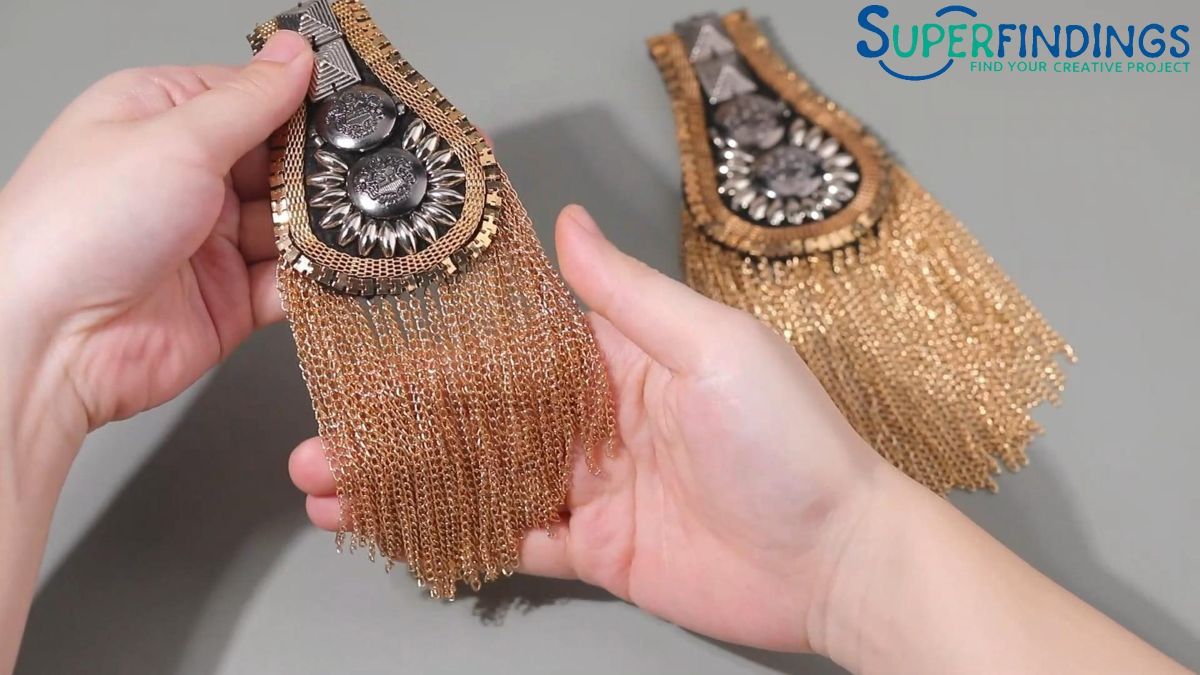
The physical construction reveals the most obvious contrast between epaulettes vs shoulder boards. Epaulettes project outward from the shoulder, creating a commanding silhouette with their characteristic bullion fringe—metallic threads that hang freely and catch light during movement. The base typically consists of stiffened fabric or metal, providing a platform for rank stars, unit numbers, or regimental badges.
Shoulder boards eliminate this dimensional aspect entirely. These flat insignia attach flush against the uniform, using minimal material and weight. Braided cords (aiguillettes) introduce another variation: decorative rope-like elements that loop around the shoulder and arm, serving ceremonial purposes without the rigid structure of traditional epaulettes.
Usage Context and Formality
Ceremonial vs service dress requirements dictate which decoration appears on a uniform. Epaulettes dominate formal occasions—state dinners, military parades, official portraits, and dress uniform events where visual impact matters. Their elaborate design signals the importance of the occasion and the wearer’s status.
Daily operational wear demands practicality. Shoulder boards fulfil this need across military branches and uniformed services:
- Quick attachment and removal for uniform changes
- Reduced snagging risk during physical activities
- Lower maintenance requirements
- Comfortable fit under equipment and gear
Embroidered patches offer another practical alternative, permanently sewn onto uniforms for units requiring durable, low-profile identification.
Rank Indication Methods
The approach to displaying rank creates another layer of uniform decoration differences. Epaulettes communicate rank through multiple visual elements working in concert. Fringe length varies by grade—longer bullion indicates higher rank in many systems. Metal stars, pips, or crowns attach to the epaulette base, whilst the base colour (gold, silver, or cloth) may denote branch or seniority.
Shoulder boards simplify this system.
Which Factors Influence the Choice Between Epaulettes and Other Shoulder Decorations?
What role do organisational regulations play in selecting shoulder adornments?
Uniform regulations dictate nearly every aspect of shoulder decoration selection. Military branches, police forces, and ceremonial organisations maintain detailed dress codes specifying exactly which shoulder adornments are permissible for each rank and occasion. The British Army, for example, reserves bullion epaulettes for officers’ mess dress whilst requiring shoulder boards for service dress.
These regulations extend beyond simple permission—they often mandate specific materials, dimensions, and placement. A lieutenant colonel cannot simply choose between epaulettes and shoulder boards based on personal preference; the uniform regulations determine which adornment suits each uniform type and event.
How does tradition shape shoulder decoration choices?
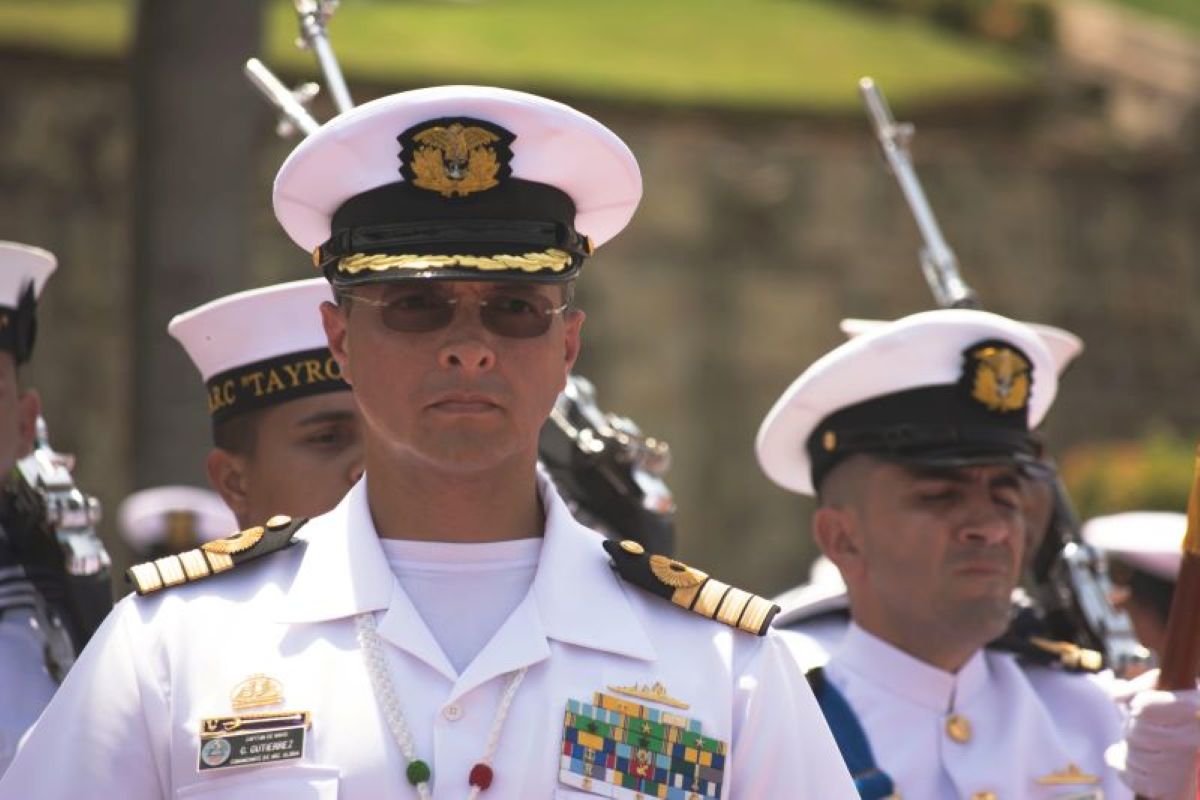
Tradition in military uniforms creates powerful precedents that influence modern selections. Regiments with centuries of history often maintain distinctive shoulder decorations that have become part of their identity. The Household Cavalry continues wearing elaborate epaulettes during state ceremonies because these ornamental pieces connect current members to their historical lineage.
Traditional practices sometimes override purely functional considerations. Guards regiments might select fringed epaulettes for ceremonial duties despite their impracticality, simply because these decorations have adorned their uniforms since the 18th century. Breaking from such traditions would diminish the visual heritage that distinguishes one unit from another.
What functional considerations determine the appropriate choice?
The distinction between ceremonial vs everyday use fundamentally shapes shoulder decoration selection. Epaulettes with their delicate fringes and metalwork suit formal occasions where appearance outweighs practicality. Shoulder boards serve daily operational needs where durability and ease of movement matter more than ornamental impact.
Consider these functional priorities:
- Ceremonial contexts: Visual impact, historical accuracy, rank visibility at distance
- Daily service: Durability, comfort during physical activity, weather resistance
- Field operations: Minimal profile, secure attachment, non-reflective materials
An officer attending a state banquet requires the grandeur of gold bullion epaulettes. That same officer conducting field exercises needs the practicality of subdued shoulder boards that won’t catch on equipment or create glare. Click here to get more about metal keychains vs. PVC Keyrings: A Comparison of Durability and Cost.
Does uniform style compatibility affect the decision?
Certain uniform styles may favour one type of shoulder decoration over another due to aesthetic coherence or historical significance. For instance, a tailored tunic might harmonise better with structured shoulder boards while a flowing frock coat lends itself to the elegance of epaulettes.
Such compatibility considerations come into play when designing new uniforms or updating existing ones. Designers must balance personal tastes with established norms to ensure that any changes made are both visually appealing and respectful towards tradition.
How do personal preferences factor into the equation?
While regulations govern most aspects of shoulder decoration selection, individual choices still hold sway—especially among senior officers who possess greater discretion over their uniforms.
Personal preferences can manifest in various forms:
- Choosing specific materials (e.g., opting for silk instead of polyester)
- Selecting unique embellishments (e.g., adding custom embroidery)
- Experimenting with unconventional placements (e.g., positioning badges off-centre)
Such decisions reflect an officer’s personality but also carry risks; deviations from standard practices might attract criticism or create confusion within ranks.
Ultimately though it is important to remember that such instances remain exceptions rather than rules—most decisions regarding shoulder adornments will continue being driven primarily by external factors such as organisational policies or cultural traditions rather than personal whims alone.
Interestingly, [the adoption of Western
What Are the Practical Considerations When Selecting Shoulder Adornments?
1. Durability of uniform accessories
The durability of uniform accessories varies significantly between epaulettes and other shoulder decorations. Here are some key points to consider:
- Metal-based epaulettes with bullion fringe require regular polishing to maintain their lustre.
- Cloth shoulder boards resist tarnishing and can withstand repeated washing.
- Epaulettes with intricate metalwork or delicate fringes are prone to damage during storage and transport, especially when compressed in kit bags or uniform cases.
2. Maintenance of epaulettes
Maintaining epaulettes requires more time and effort compared to simpler alternatives. Here’s what you need to know:
- Gold or silver bullion fringe tangles easily and requires careful brushing after each wear.
- Metal components oxidise when exposed to moisture, necessitating specialised cleaning solutions.
- Shoulder boards, on the other hand, typically need only spot cleaning or occasional replacement of insignia pins.
3. How does material choice affect longevity?
Different materials offer distinct durability profiles that can impact the longevity of shoulder adornments. Consider the following:
- Synthetic bullion fringe resists tarnishing better than genuine metal threads but may appear less authentic under close inspection.
- Cloth-based decorations withstand frequent laundering, making them suitable for uniforms requiring regular cleaning.
- Metal scales and chains provide excellent longevity but add considerable weight to the uniform.
4. Comfort during prolonged wear
Comfort becomes critical for personnel involved in extended ceremonies or duties. Here’s how different shoulder adornments can affect comfort:
- Epaulettes with substantial metal components create pressure points on shoulders, particularly when combined with equipment straps or weapon slings.
- The weight distribution differs markedly between various types of shoulder decorations:
- Traditional bullion epaulettes weigh between 150-250 grams per pair.
- Metal shoulder scales weigh between 200-300 grams per pair.
- Cloth shoulder boards weigh between 20-40 grams per pair.
- Embroidered patches weigh between 10-15 grams per pair.
5. Do shoulder decorations restrict movement?
It’s important to consider whether shoulder decorations may restrict movement during physical activities. Here’s what you should know:
- Rigid epaulettes can limit shoulder mobility, making it uncomfortable to salute, handle weapons, or operate vehicles.
- Flexible shoulder boards conform to body movement, reducing restriction while still maintaining a professional appearance.
6. Practical hazards created by fringed epaulettes
Fringed epaulettes can create practical hazards during active duties. Be aware of the following potential issues:
- The dangling elements of fringed epaulettes may catch on equipment such as rifle slings or radio aerials.
- They may also snag on vehicle interiors, posing a risk during transportation.
To mitigate these hazards, consider opting for flat shoulder decorations that eliminate any interference with equipment or surroundings.
How Do Different Organisations Customise Their Shoulder Decorations?
Do organisations use specific colours and materials to identify rank and unit?
Yes, the customisation of uniform accessories through colour and material creates instant visual recognition of hierarchy and affiliation. Gold-coloured shoulder decorations typically denote senior officers in most military forces, whilst silver or white materials indicate junior commissioned ranks. Cloth-based decorations in unit-specific colours help identify particular regiments or divisions without requiring close inspection of detailed insignia.
The British Army employs a sophisticated system where scarlet cloth backing on shoulder boards identifies infantry regiments, whilst rifle regiments use black backing. Royal Navy officers wear gold lace rank stripes on navy blue shoulder boards, with the width and number of stripes indicating seniority. The U.S. Marine Corps uses red piping on their shoulder boards to distinguish themselves from other service branches.
What unique adaptations do different armed forces implement?
Armed forces worldwide have developed distinctive approaches to military unit insignia that reflect their heritage and operational requirements. The French Foreign Legion maintains traditional green and red epaulettes with gold or silver fringes depending on rank, preserving a 19th-century aesthetic that reinforces their elite status. These ceremonial pieces feature regimental numbers embroidered in contrasting thread.
Russian military forces incorporate intricate woven patterns into their shoulder boards, with specific designs denoting different branches:
- Ground Forces: Red piping and backing
- Airborne Troops: Light blue elements
- Naval Infantry: Black with gold anchors
- Strategic Rocket Forces: Black with red piping
The Indian Army retains British-influenced traditions whilst adding unique elements such as unit-specific lanyard colours worn on the shoulder. Gurkha regiments display crossed kukris on their shoulder titles, immediately identifying their prestigious lineage.
How do ceremonial units differ in their shoulder decoration choices?
Ceremonial and honour guard units often employ more elaborate shoulder decorations than standard service personnel. The Vatican Swiss Guard wears metal shoulder scales reminiscent of Renaissance armour, polished to a mirror finish for formal occasions. British Household Division regiments feature heavily fringed epaulettes with regimental badges in precious metals during state ceremonies.
Military academies frequently adopt distinctive shoulder decorations for cadets as a symbol of their institution’s identity and tradition.
Which Shoulder Decoration Is Right for Your Uniform?
The correct shoulder decoration depends on your uniform’s intended purpose and your organisation’s established protocols. Start by consulting your organisation’s dress code regulations, as most military branches, police forces, and ceremonial groups have specific requirements that dictate which shoulder adornments are appropriate for different occasions.
Matching Your Choice to Uniform Purpose
Ceremonial and formal occasions typically call for epaulettes, whilst daily service wear suits shoulder boards or patches better. If you’re preparing for parades, state dinners, or official ceremonies, traditional fringed epaulettes provide the gravitas and visual impact these events demand. For routine duties, training exercises, or field operations, flat shoulder boards offer the rank identification you need without compromising mobility or comfort.
Consider these scenarios when choosing uniform accessories:
- Dress uniforms: Epaulettes with metallic fringes and detailed insignia
- Service uniforms: Shoulder boards or embroidered patches
- Mess dress: Simplified epaulettes or decorative aiguillettes
- Working uniforms: Cloth shoulder marks or removable rank slides
Aligning With Organisational Standards
Your organisation’s traditions and regulations should guide your selection before personal preferences. Naval forces often favour shoulder boards for their clean lines and maritime heritage, whilst army regiments may maintain epaulette traditions dating back centuries. Some organisations permit choice within certain parameters—you might select between gold or silver materials based on your branch or unit affiliation.
Review your organisation’s uniform manual to identify:
- Approved decoration types for each uniform category
- Rank-specific design requirements
- Colour and material specifications
- Attachment methods and positioning standards
Balancing Tradition, Function, and Style
The ideal shoulder decoration honours heritage whilst meeting practical needs. If your organisation values historical continuity, epaulettes maintain visual links to military traditions spanning centuries. When functionality takes precedence—such as in active service roles—shoulder boards provide durability and ease of maintenance without sacrificing professional appearance.
Style compatibility matters too. Ornate epaulettes complement high-collared tunics and tailored dress coats but may appear incongruous on modern tactical uniforms. Conversely, subdued shoulder patches suit