
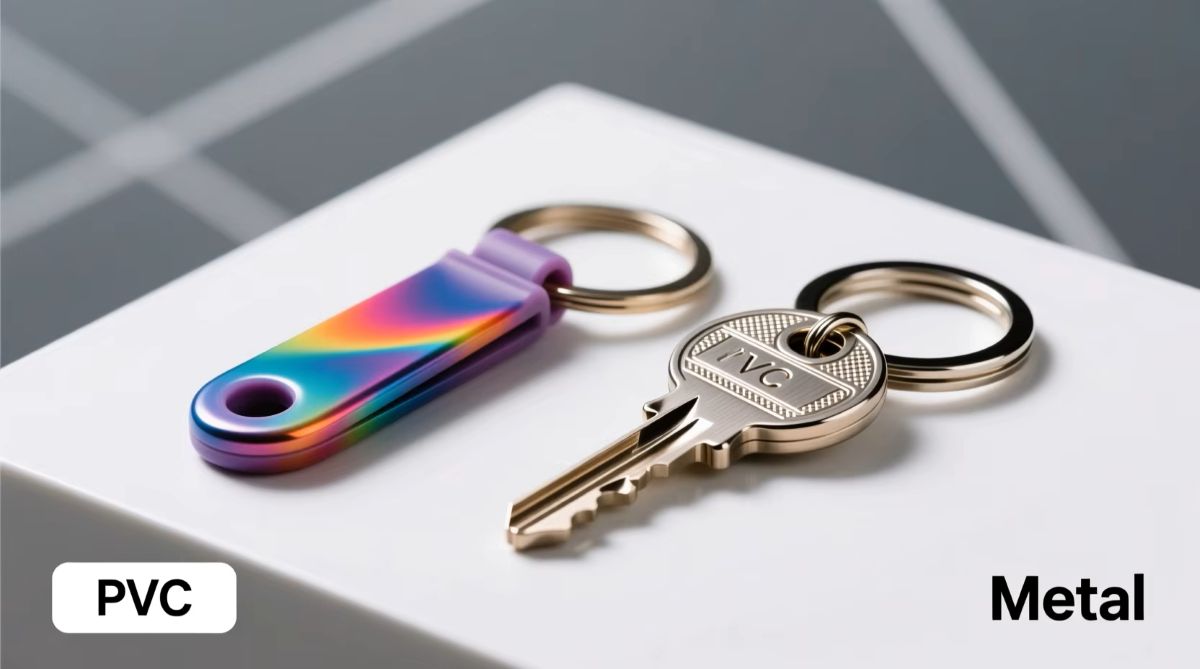
What Are Metal Keychains and PVC Keyrings Made From?
Metal keychains and PVC keyrings represent two distinct approaches to keychain manufacturing, each defined by their base materials. Understanding the composition of these materials directly impacts your expectations for durability and cost.
Metal Keychain Materials
Metal keychain draw their strength from various metallic compounds, each offering unique properties:
- Iron – Provides robust structural integrity and serves as a foundation for many keychain designs
- Steel – Delivers exceptional durability with superior resistance to deformation and breaking
- Copper – Offers natural antimicrobial properties alongside a distinctive aesthetic appeal
- Zinc alloy – Combines affordability with good corrosion resistance and casting versatility
- Stainless steel – Resists rust and oxidation whilst maintaining a polished appearance
- Aluminium – Balances lightweight construction with reasonable strength
- Magnesium and nickel – Used in specialised applications requiring specific properties
These metals contribute to keychains that withstand daily wear, resist scratches, and maintain their form under pressure. The molecular structure of metallic bonds creates rigid connections between atoms, resulting in materials that can endure impacts, temperature fluctuations, and prolonged use without significant degradation.
PVC Keyring Composition
Polyvinyl chloride (PVC) represents a fundamentally different material category as a soft thermoplastic. This synthetic polymer consists of repeating vinyl chloride units that create flexible, mouldable chains at the molecular level.
PVC’s characteristics make it particularly suitable for keyring production. The material bends without breaking, absorbs minor impacts through deformation rather than fracturing, and returns to its original shape after stress. Its water-resistant nature prevents moisture absorption, eliminating concerns about rust or oxidation that affect metal alternatives.
The thermoplastic property allows PVC to be heated and moulded into intricate shapes, then cooled to retain those forms permanently. This flexibility during manufacturing translates to design versatility whilst the finished product maintains sufficient rigidity for practical keyring applications.
How Do Metal Keychains Stand Up Against PVC Keyrings in Terms of Durability?
Metal keychains significantly outlast PVC keyrings in most durability tests. The inherent strength of metallic materials creates a product that resists daily wear far better than soft thermoplastics, though each material type brings distinct advantages to specific usage scenarios.
Metal Durability: Built to Last
Scratch resistance stands as one of metal’s most impressive qualities. Iron, steel, copper, and zinc alloy keychains maintain their appearance even after years of contact with keys, coins, and other abrasive items in pockets or bags. The hard surface of metal withstands impacts that would leave permanent marks on softer materials.
Temperature extremes pose little threat to metal keychains. These accessories function flawlessly whether exposed to:
- Freezing winter conditions below -20°C
- Hot summer car interiors exceeding 60°C
- Rapid temperature fluctuations between environments
- Direct sunlight for extended periods
The wear resistance of metal keychains ensures they retain structural integrity under pressure. Stainless steel and aluminium variants particularly excel at maintaining their shape despite constant pulling, twisting, and weight-bearing stress from multiple keys.
Metal does present maintenance challenges. Certain alloys develop tarnish or oxidation when exposed to moisture and air over extended periods. Iron-based keychains may show rust spots if the protective coating becomes compromised. Regular cleaning and proper surface treatments mitigate these issues, yet they remain considerations for long-term ownership.
PVC Flexibility: A Different Approach to Longevity
PVC flexibility offers unique durability advantages that metal cannot match. The soft thermoplastic material bends and compresses without breaking, absorbing impacts that might dent or scratch rigid metal surfaces. This elasticity allows PVC keyrings to bounce back from drops and crushing forces.
Water resistance gives PVC keyrings an edge in humid or wet environments. Unlike certain metals that require protective coatings, polyvinyl chloride naturally repels moisture and never rusts. Users can wash PVC keyrings with soap and water without degrading the material or affecting the design.
Rough handling reveals PVC’s limitations. Sharp objects can puncture or cut through the material, compromising its integrity. While this vulnerability may not be an issue for everyday use, it poses a risk in situations where keys are tossed around or stored alongside sharp tools.
In summary, both metal keychains and PVC keyrings have their strengths when it comes to durability. Metal excels in scratch resistance and wear resistance but requires maintenance to prevent tarnish or rust. On the other hand, PVC offers flexibility and water resistance but is susceptible to damage from sharp objects.
What About The Cost Factor When Choosing Between Metal Keychains And PVC Keyrings?
The price differences between metal keychains and PVC keyrings come from how complex it is to make them and how much the raw materials cost. Generally, metal keychains are more expensive than PVC ones because making them involves more labour and higher-quality materials.
Why Metal Keychains Are More Expensive
Metal keychains require advanced manufacturing techniques, which increase production costs. The process includes welding, precise machining, and often several finishing steps to achieve a sleek look. Each type of metal—such as stainless steel, zinc alloy, or copper—requires specific tools and expertise.
Additional costs come from secondary operations:
- Deburring to smooth sharp edges
- Electroplating or powder coating for surface protection
- Engraving or etching for customisation
- Quality control inspections for structural integrity
These complexities are reflected in the prices of metal keychains. Small batch orders usually range from £2.50 to £10 per unit, depending on size and design intricacy. Bulk purchases lower prices to £1.20 to £3.30 each, but even at high volumes, metal remains the more expensive option. Intricate designs with multiple components or premium finishes push costs toward the upper end of this range.
The Budget-Friendly Appeal of PVC Keyrings
PVC keyrings are consistently cheaper due to simpler production methods. Polyvinyl chloride itself is an inexpensive thermoplastic material, and the moulding process requires less specialised equipment than metalworking. Manufacturers can produce PVC keyrings through injection moulding or soft rubber casting—both relatively straightforward techniques.
Individual PVC keyrings generally cost £0.40 to £2, making them accessible for personal purchases and small-scale gifting. Large quantity orders dramatically reduce the PVC keyring cost, with prices dropping below £0.25 per unit when ordering thousands. This affordability makes PVC ideal for promotional campaigns, event giveaways, or any situation requiring high volumes.
Evaluating Long-Term Value
Initial purchase price tells only part of the story. Metal keychains justify their higher cost through extended lifespan and maintained appearance. A well-crafted metal keychain can withstand daily use without losing its charm, making it a worthwhile investment over time.
On the other hand, while PVC keyrings may be budget-friendly upfront, they might not offer the same durability or aesthetic appeal in the long run. If you’re seeking something that will endure wear and tear while retaining its visual appeal, opting for metal could prove advantageous despite its initial expense.
In summary:
- Consider your budget: If you have limited funds or need large quantities quickly, go for affordable PVC options.
- Evaluate longevity requirements: For items intended as keepsakes or gifts meant to last years (like wedding favours), investing in durable metals pays off.
- Assess aesthetic preferences: Metal exudes sophistication; if that’s crucial for branding/presentation purposes (corporate events), favour it over plastic alternatives.
Ultimately deciding between these two hinges upon balancing immediate affordability against potential longevity/visual impact based on specific needs/preferences involved!
Do Design Options Differ Significantly Between Metal And PVC Keychains?
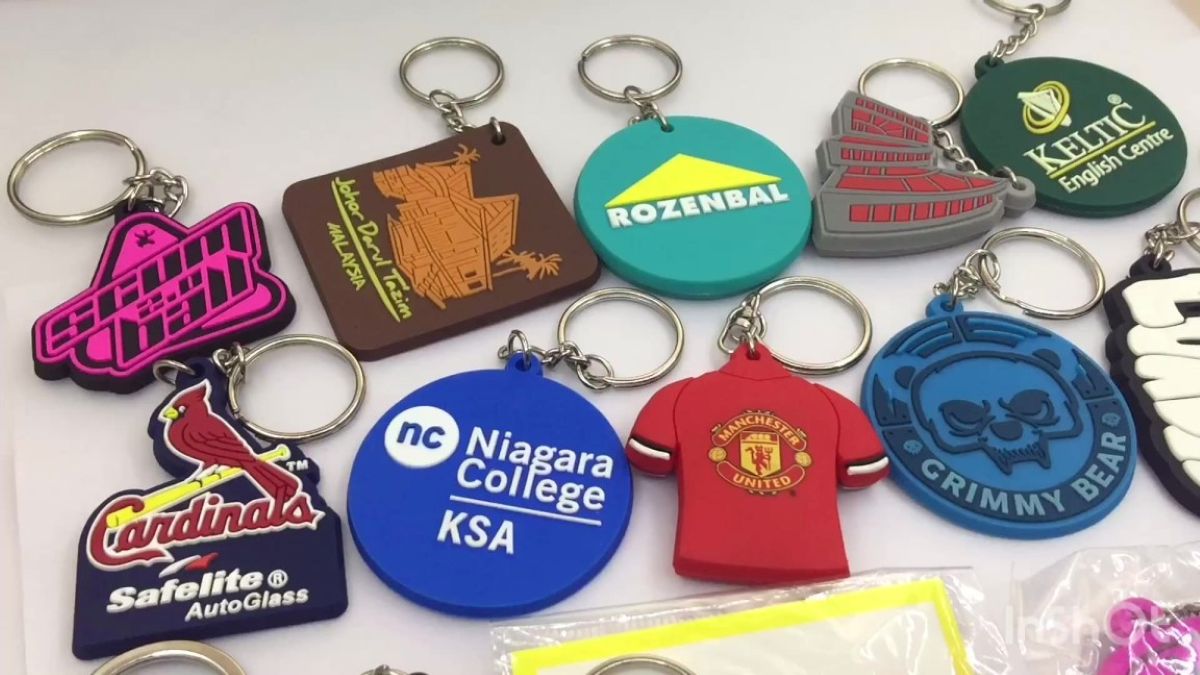
Yes, material choice dramatically affects customisation possibilities. Metal keychains excel at creating sophisticated, professional designs through metal keychain engraving, while PVC keyrings offer vibrant, complex visual options that metal simply cannot match.
Metal’s Premium Aesthetic and Engraving Capabilities
Metal keychains deliver an unmistakable premium feel that appeals to corporate clients and high-end gift recipients. The solid, weighty nature of materials like stainless steel, brass, and zinc alloy creates an immediate impression of quality and permanence.
Engraving techniques work exceptionally well on metal surfaces, producing crisp, permanent designs that won’t fade or wear away. Laser engraving creates precise text and logos with remarkable detail, whilst traditional stamping methods can produce raised or recessed designs that add tactile dimension. These techniques suit:
- Corporate logos requiring sharp, professional presentation
- Personalised text such as names, dates, or messages
- Minimalist designs emphasising elegance over complexity
- Monochromatic or two-tone colour schemes
Metal does face limitations with intricate, multi-coloured designs. Whilst enamel filling can add colour to engraved sections, the process increases production costs and complexity. Achieving photorealistic images or gradients proves challenging on metal surfaces compared to PVC alternatives.
PVC’s Superior Colour Range and Design Versatility
PVC colour options far exceed what metal can offer, making these keyrings ideal for brands requiring vibrant, eye-catching designs. The moulding process allows manufacturers to mix multiple colours within a single piece, creating complex patterns and detailed imagery.
The design versatility of PVC keyrings includes:
- Full-colour reproduction: Logos with multiple shades render accurately without additional costs
- 3D moulding: Raised sections create depth and texture impossible with flat metal
- Character designs: Cartoon mascots and playful shapes work perfectly in soft PVC
- Photographic detail: High-resolution images transfer well to PVC surfaces
- Translucent effects: Semi-transparent PVC creates unique visual effects
PVC manufacturing processes accommodate virtually any shape imaginable—whether it’s a simple geometric form or an intricate custom silhouette—making it easier than ever for brands to bring their creative visions to life. You may like to visit https://traitbase.info/epaulettes-vs-shoulder-decorations-which-is-right-for-your-uniform/ to get more about Epaulettes vs. Shoulder Decorations: Which is Right for Your Uniform?
Is There A Maintenance Aspect To Consider When Deciding Between These Two Types Of Keychains?
Yes, maintenance requirements differ substantially between metal and PVC keychains due to their distinct material properties. Metal keychains demand more attentive care to preserve their appearance, while PVC keyrings need only basic cleaning routines.
Metal Keychain Care Requirements
Metal keychains require regular attention to maintain their polished, professional appearance. The specific metal keychain care routine depends on the alloy used:
For stainless steel and zinc alloy keychains:
- Polish with a soft, lint-free cloth every 2-3 weeks to prevent fingerprint buildup
- Apply a thin layer of metal polish quarterly to restore shine
- Store in dry conditions to minimise the risk of tarnishing
- Remove immediately after exposure to saltwater or chlorine
For copper and brass varieties:
- Use specialised metal cleaners designed for these materials
- Apply anti-tarnish solutions to slow oxidation
- Buff gently with microfibre cloths to avoid scratching engraved surfaces
- Keep away from acidic substances that accelerate patina formation
For painted or coated metal keychains:
- Avoid abrasive cleaners that strip protective finishes
- Clean with mild soap and water only
- Dry thoroughly after washing to prevent moisture penetration
- Reapply clear coat sealant annually if coating shows wear
PVC Cleaning Methods
PVC keyrings offer significantly simpler maintenance routines. PVC cleaning methods require minimal effort and no specialised products:
- Wipe with a damp cloth to remove surface dirt
- Use mild soapy water for stubborn stains
- Rinse under running water without concern for rust
- Air dry completely before reattaching to keys
The flexible nature of PVC means it resists cracking during cleaning. Unlike metal, PVC doesn’t require protective treatments or polishing compounds. A quick wash every few weeks keeps these keyrings looking fresh without degrading the printed or moulded designs. Visit https://shop.ais.gov.au/ais-logo-soft-pvc-keyring/ to get more about AIS logo soft PVC keyring.
Time Investment Comparison
Metal keychains typically require 5-10 minutes of maintenance monthly, including polishing and protective treatments. PVC keyrings need less than 2 minutes of attention every few weeks for cleaning purposes.
Which Type Of Keychain Would Be More Suitable For Different Uses And Audiences?
The choice between metal and PVC keychains depends heavily on who will receive them and how they’ll be used. Different scenarios call for different materials based on practical needs and aesthetic expectations.
Corporate and Professional Settings
Metal keychains excel in business environments where first impressions matter. Companies distributing promotional items at trade shows or conferences benefit from metal’s sophisticated appearance, which reflects positively on brand perception. Executive gifts, employee recognition awards, and high-value client appreciation tokens gain credibility through metal’s premium feel. The engraving capabilities allow for crisp company logos and professional messaging that maintains clarity over years of use.
PVC keyrings work better for mass corporate giveaways at large-scale events where budget constraints limit spending per unit. Tech companies, creative agencies, and youth-oriented brands often prefer PVC’s playful aesthetic and vibrant colour options that align with their casual, innovative image.
Personal Use Versus Gift-Giving
Personal daily use considerations include:
- Weight preference: PVC suits those who prefer lightweight accessories that won’t weigh down pockets or bags
- Activity level: Metal withstands rough treatment from outdoor enthusiasts, tradespeople, or active lifestyles
- Aesthetic taste: Minimalists gravitate towards metal’s sleek lines whilst those who enjoy bold statements prefer PVC’s design flexibility
Gift-giving scenarios require target audience consideration:
- Metal keychains suit milestone occasions (graduations, retirements, anniversaries) where longevity symbolises lasting relationships
- PVC keyrings work for casual gifts, party favours, or seasonal celebrations where fun designs take priority over formality
- Age demographics influence choice—older recipients typically appreciate metal’s traditional elegance whilst younger audiences respond to PVC’s trendy, customisable designs
Event-Specific Applications
Wedding favours and formal celebrations demand the refined appearance metal provides. Guests expect quality mementos that match the event’s sophistication level. The durability ensures these keepsakes remain functional reminders of special occasions for decades.
Children’s parties, sports team events, and charity fundraisers benefit from PVC’s affordability and safety features. The soft material poses no sharp edges, making it.
Conclusion
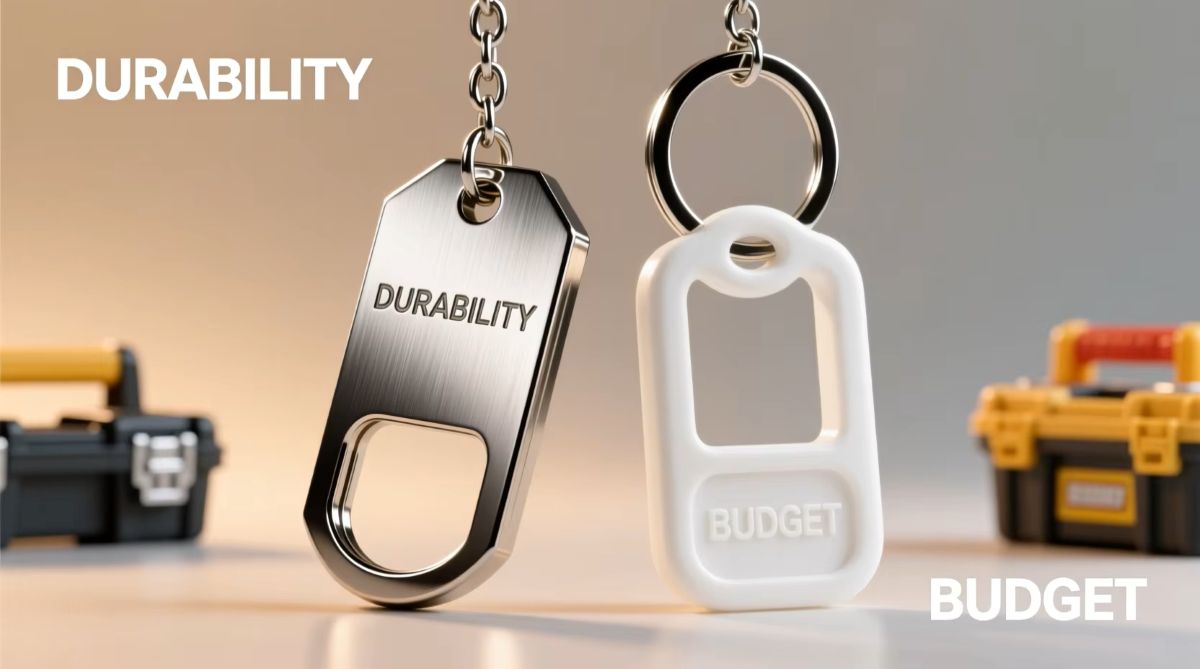
Choosing keychain material type depends on balancing your specific priorities against practical constraints. Metal keychains deliver unmatched durability and premium aesthetics but require a larger investment, whilst PVC keyrings offer budget-friendly versatility with vibrant design options at the expense of longevity.
Your decision should reflect the keychain’s intended role. Corporate gifts, high-value promotional items, or personal keepsakes that need to last years justify the higher cost of metal. Event giveaways, casual merchandise, or situations where quantity matters more than individual longevity make PVC the sensible choice.
Consider these decisive factors when making your selection:
- Budget allocation: Can you afford £1.50-£4 per unit for metal, or do you need PVC’s £0.30-£2.50 range?
- Expected lifespan: Do you need 5+ years of daily use, or is 1-2 years sufficient?
- Design requirements: Does your brand demand engraved elegance or colourful, playful graphics?
- Maintenance capacity: Will users care for metal properly, or do they need low-maintenance PVC?
- Environmental exposure: Will keychains face extreme conditions favouring metal’s resilience?
The Metal Keychains vs. PVC Keyrings: A Comparison of Durability and Cost ultimately reveals no universal winner. Metal excels where quality and permanence matter most. PVC thrives when affordability and creative freedom take precedence. Assess your audience expectations, usage scenarios, and financial parameters before committing to either material—the right choice serves your specific needs rather than following generic recommendations.
If you’re considering alternative materials for your keychain, like paracord, be sure to explore the unique benefits they can offer as well. Additionally, understanding the keychain usage scenarios can further guide your decision-making process.